Models(模型(Models))
In Foundry, a model is an artifact for inference that contains machine learning, forecasting, optimization, physical models, or business rules. Within a use case, models encode knowledge about your data to create predictions and empower decisions.
Models developed inside or integrated into Palantir provide:
- Full version history, granular model permissioning, automatic dependency management, model lineage, and API management
- No-code hosting for live inference through model deployments
- No-code batch inference in data pipelines through the Pipeline Builder trained model node
- Model management, evaluation, and deployment via the Modeling Objectives application
- Binding to the Foundry Ontology, allowing for operationalization via Foundry applications, Functions on models, and Scenarios infrastructure.
Architecture
A Model resource in Palantir comprises of two related but distinct components:
- Model artifacts: The model weights or container where the trained model is saved.
- Model adapter: The logic that describes how the platform can interact with the model artifacts to load, initialize, and perform inference with the model.
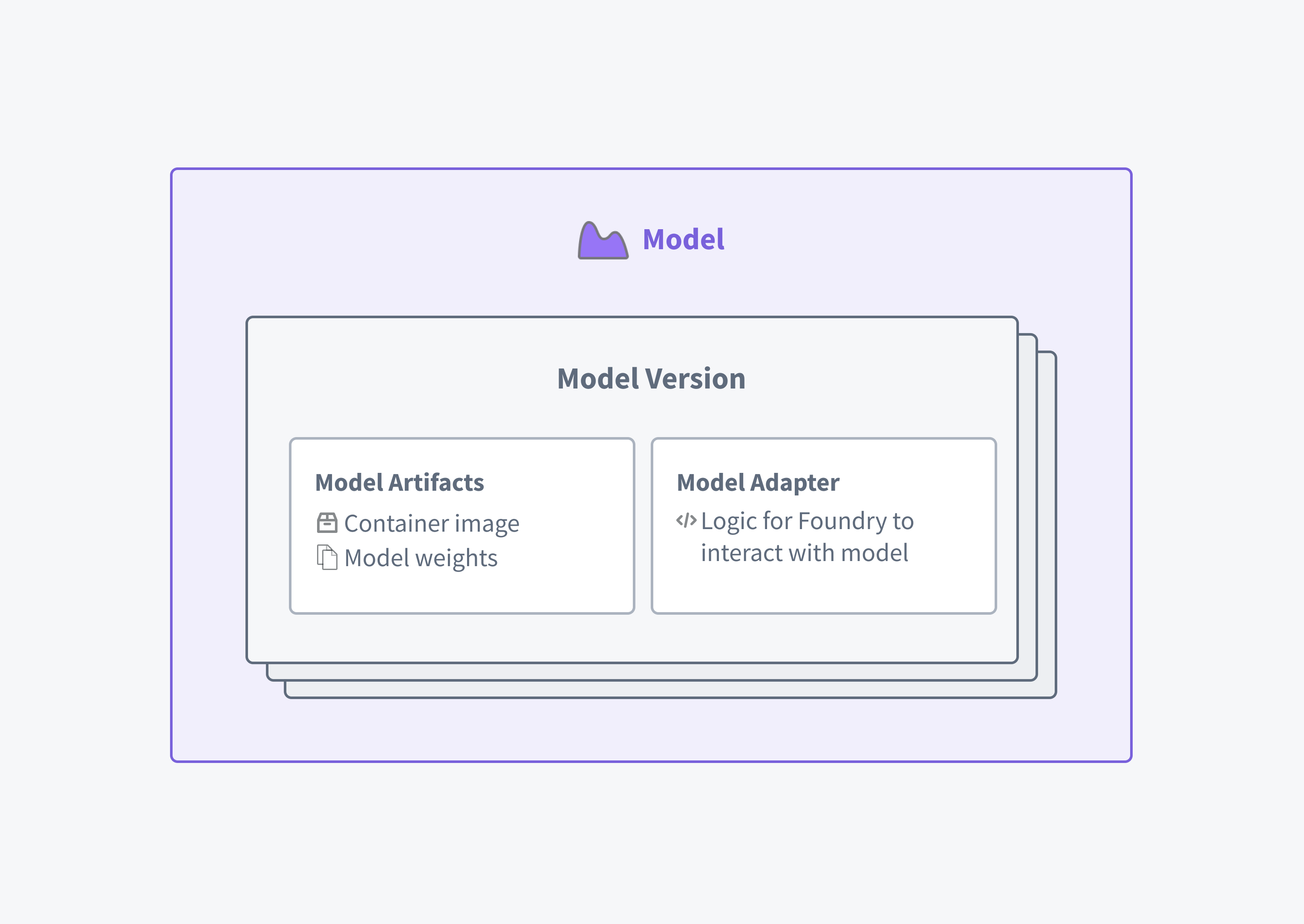
An adapter is published as part of a Python library to enable communication with the stored model artifacts. It enables the platform to load, initialize, and run inference on any kind of model. Adapters are designed to be flexible and can be used to wrap the different model types that are supported in Foundry:
- Models trained in Foundry in Code Repositories, Jupyter code workspaces, or Model Studio
- Manually uploaded model files or checkpoints
- Models uploaded as containers
中文翻译
模型(Models)
在 Foundry 中,模型(model) 是一种用于推理的产物,包含机器学习、预测、优化、物理模型或业务规则。在用例中,模型对数据中的知识进行编码,以生成预测并赋能决策。
在 Palantir 内部开发或集成到 Palantir 的模型提供以下功能:
- 完整的版本历史、细粒度的模型权限管理、自动依赖管理、模型谱系(lineage)以及 API 管理
- 通过模型部署(model deployments)实现实时推理的无代码托管
- 通过流水线构建器训练模型节点(Pipeline Builder trained model node)在数据流水线中实现无代码批量推理
- 通过建模目标(Modeling Objectives)应用进行模型管理、评估和部署
- 绑定到 Foundry 本体(Ontology),通过 Foundry 应用、模型函数(Functions on models) 和 场景(Scenarios) 基础设施实现可操作化。
架构(Architecture)
Palantir 中的模型资源包含两个相关但不同的组件:
- 模型产物(Model artifacts): 模型权重 或 保存训练后模型的容器。
- 模型适配器(Model adapter): 描述平台如何与模型产物交互以加载、初始化并执行推理的逻辑。
适配器作为 Python 库的一部分发布,用于与存储的模型产物进行通信。它使平台能够加载、初始化并对任何类型的模型执行推理。适配器设计灵活,可用于封装 Foundry 中支持的不同模型类型:
- 在 Foundry 的代码仓库(Code Repositories)、Jupyter 代码工作空间(Jupyter code workspaces) 或模型工作室(Model Studio)中训练的模型
- 手动上传的模型文件或检查点(model files or checkpoints)
- 以容器形式上传的模型