Foundry Rules
Foundry Rules (previously known as Taurus) enables users to actively manage complex business logic in Foundry with a point-and-click, low-code interface. With Foundry Rules, users can create rules and apply those rules to datasets, objects, and time series for a variety of use cases like alert generation or data categorization.
Foundry Rules comprises a set of components for creating, managing, and applying rules:
- A rule is a set of conditions that, taken together, can specify particular rows of data in a dataset.
- The conditions that form a rule apply to the columns of a dataset and can range from simple filters to complex aggregations, joins, or other operators.
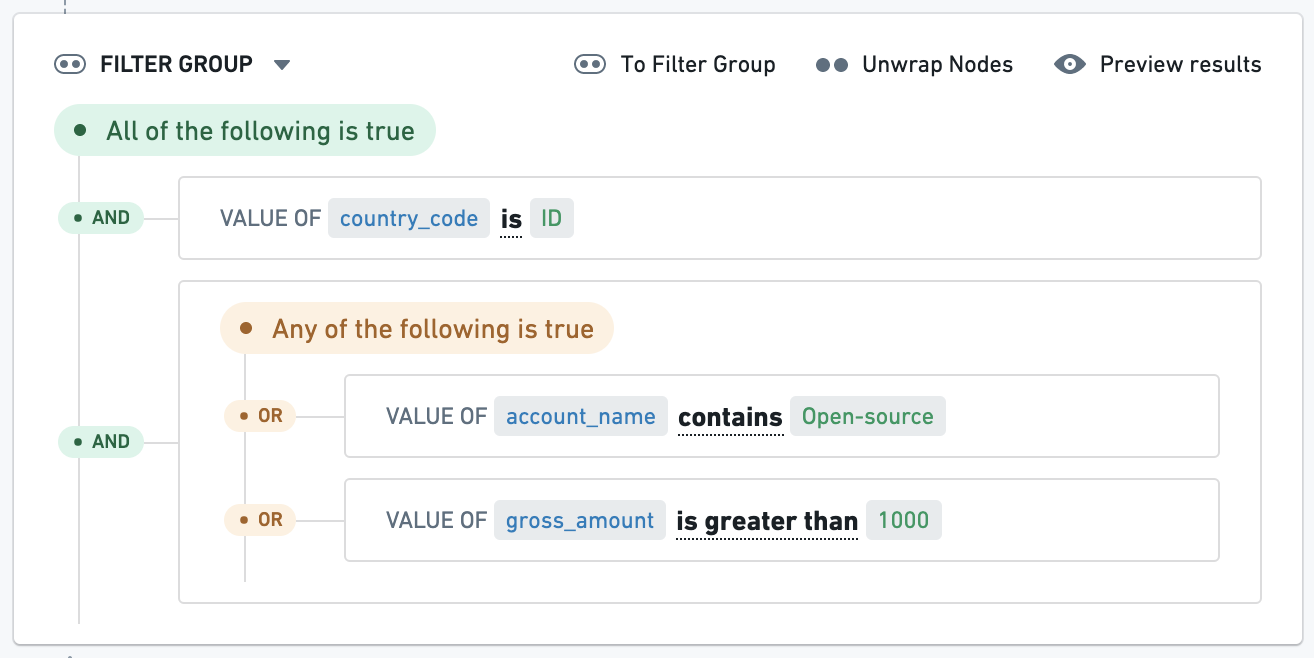
The following pages describe several core concepts and provides instructions for how to deploy and customize Foundry Rules.
Example use cases
Foundry Rules can simplify the process of managing use cases that involve complex sets of rules, such as:
- Anti-Money Laundering (AML): Flag suspicious transactions through rules targeting both per-transaction and aggregated metrics.
- Equipment monitoring: Raise alerts for potential equipment degradation based on sensor data (e.g. when certain measurements reach specific values).
- Cohorting: Categorize entities into groups or "cohorts" based on rules. For example, creating groups of customers with particular features for better targeted marketing.
中文翻译
Foundry Rules
Foundry Rules(原名 Taurus)使用户能够通过点击式低代码界面,在 Foundry 中主动管理复杂的业务逻辑。借助 Foundry Rules,用户可以创建规则并将其应用于数据集、对象和时间序列,适用于告警生成或数据分类等多种用例。
Foundry Rules 包含一组用于创建、管理和应用规则的组件:
- 规则(rule) 是一组条件(conditions),这些条件共同作用可指定数据集中的特定数据行。
- 构成规则的条件应用于数据集的列,范围涵盖从简单筛选到复杂聚合、连接或其他运算符。
以下页面介绍了几个核心概念,并提供了如何部署和自定义 Foundry Rules 的说明。
示例用例
Foundry Rules 可简化涉及复杂规则集的用例管理流程,例如:
- 反洗钱(AML): 通过针对单笔交易和聚合指标的规则标记可疑交易。
- 设备监控: 基于传感器数据(例如当某些测量值达到特定数值时)对潜在设备退化发出告警。
- 分组归类: 根据规则将实体分类为不同组别或"群组"。例如,创建具有特定特征的客户群体以实现更精准的营销。